
01 / CASE STUDY
Project background
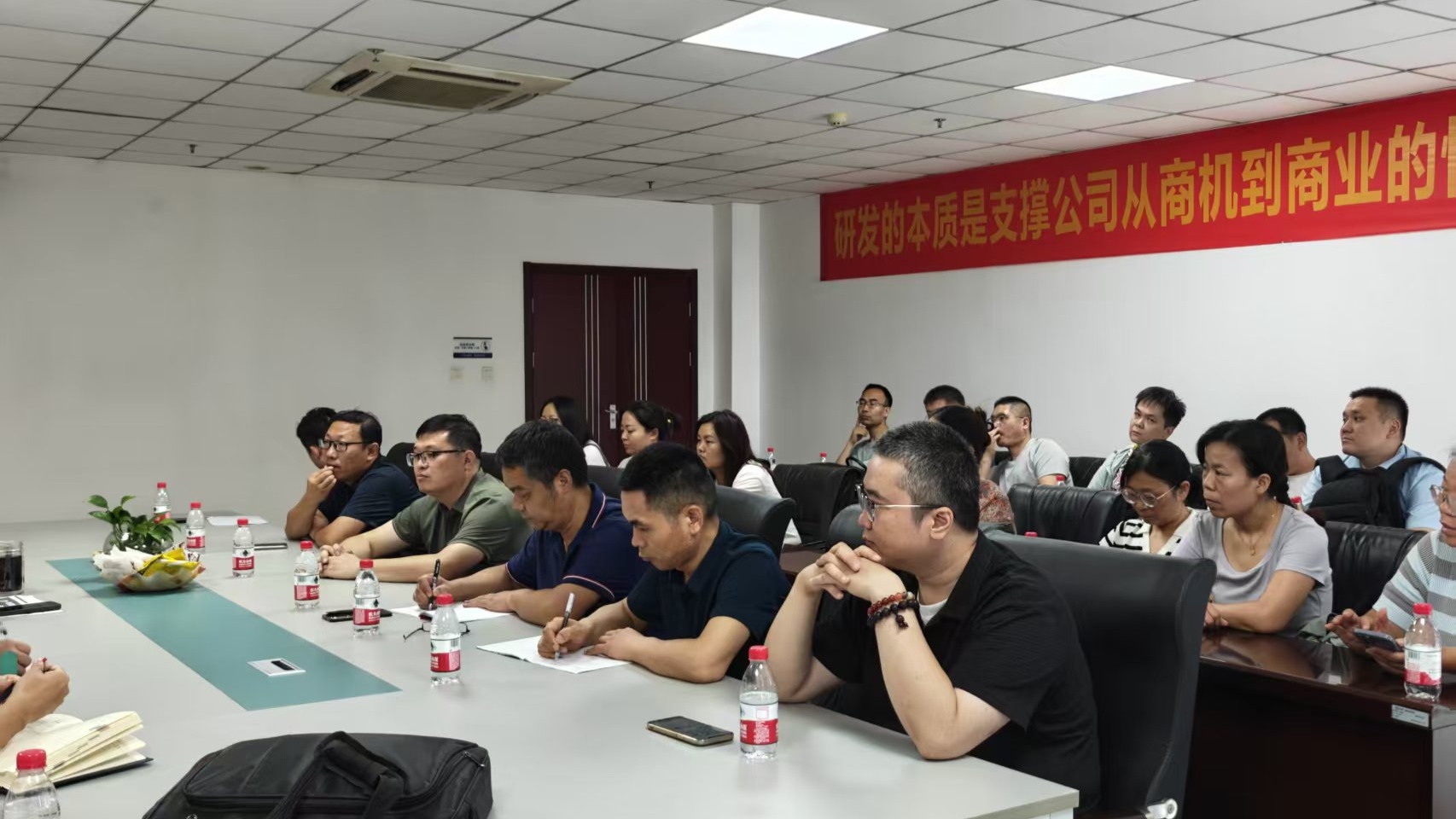
In July 2025 the team visited Zhengzhou Weikom Co., Ltd. to hold a focused seminar on robotics foundational curriculum development and course production, accumulating practical experience for robotics education curriculum building.
02 / CASE STUDY
Client and scenario challenges
This item is not separately specified in the public material. Refer to the original project records and agreed scope.
03 / CASE STUDY
Solution
Approach
- Curriculum development: developed an iteratively usable curriculum structure and content around robotics foundational education
- Teaching seminar: held a focused seminar with the partner team on curriculum production and teaching methods
- Experience accumulation: turned seminar results into reusable experience for robotics education curriculum building
04 / CASE STUDY
Technology and capabilities
05 / CASE STUDY
Deliverables / prototype scope
Key Modules
1. Curriculum structure design
Curriculum structure was designed around robotics foundational education goals, covering the combination of technology, content and engineering practice. Courses are sequenced into one learning chain following how the capability actually forms, and every stage ends with verifiable practical output:
- AI foundations: concepts, application boundaries and basic methods
- Linux / Python: engineering environment and programming fundamentals
- ROS2: robot software architecture, nodes and communication
- Computer vision: perception principles, recognition and data processing
- Robot development: mapping, localization, navigation and task development
- Embodied AI: frontier practice combining foundation models with robots
- Capstone project: a complete project-based lab closing with delivery and defense
2. Content seminar
Joint content seminars ensured curriculum could retain engineering reality while remaining usable in classroom scenarios.
3. Teaching method exploration
Explored teaching methods that combine robotics technology, curriculum content and engineering practice, providing methodological support for later rollout. Two principles guide delivery: equipment as teaching material — students learn on real robots and sensors rather than only in simulation; delivery-oriented — every stage has a defined output, and the integrated lab closes with a defense and demonstrable results.
06 / CASE STUDY
Outcome and current status
Outcome
- Completed the robotics foundational curriculum development and teaching seminar with Zhengzhou Weikom
- Accumulated reusable experience for robotics education curriculum building
- Explored a teaching approach that combines robotics technology with educational practice
The value of curriculum development is not a single syllabus. It is making engineering reality and classroom teachability coexist over time.