01 / CASE STUDY
Project background
Project Background
Home eldercare is not solved by remote visibility alone. The harder question is whether the system, the family, and field-service roles can respond as one loop when something abnormal happens. Home Guardian frames that challenge as a more complete service-platform concept: digital sensing and alerts keep the situation visible, while manual visits and service records close the loop offline.
Based on the available material, this project reads more like a refined product / solution website than an operational backend dashboard. So this website entry presents it as a solution-stage prototype case, focusing on platform logic and service structure instead of overstating delivery maturity.
02 / CASE STUDY
Client and scenario challenges
This item is not separately specified in the public material. Refer to the original project records and agreed scope.
03 / CASE STUDY
Solution
Solution Positioning
- Remote care: sensing and status visibility help families and service teams stay aware of home conditions
- Manual visits: scheduled checks, home-environment reviews, and adaptation suggestions remain part of the service loop
- Exception alerts: when falls, inactivity, or unusual routines appear, the system is designed to push the signal to the right people quickly
04 / CASE STUDY
Technology and capabilities
05 / CASE STUDY
Deliverables / prototype scope
This is an in-house prototype. These are prototype views and functions, not a claim of client deployment.
Key Views
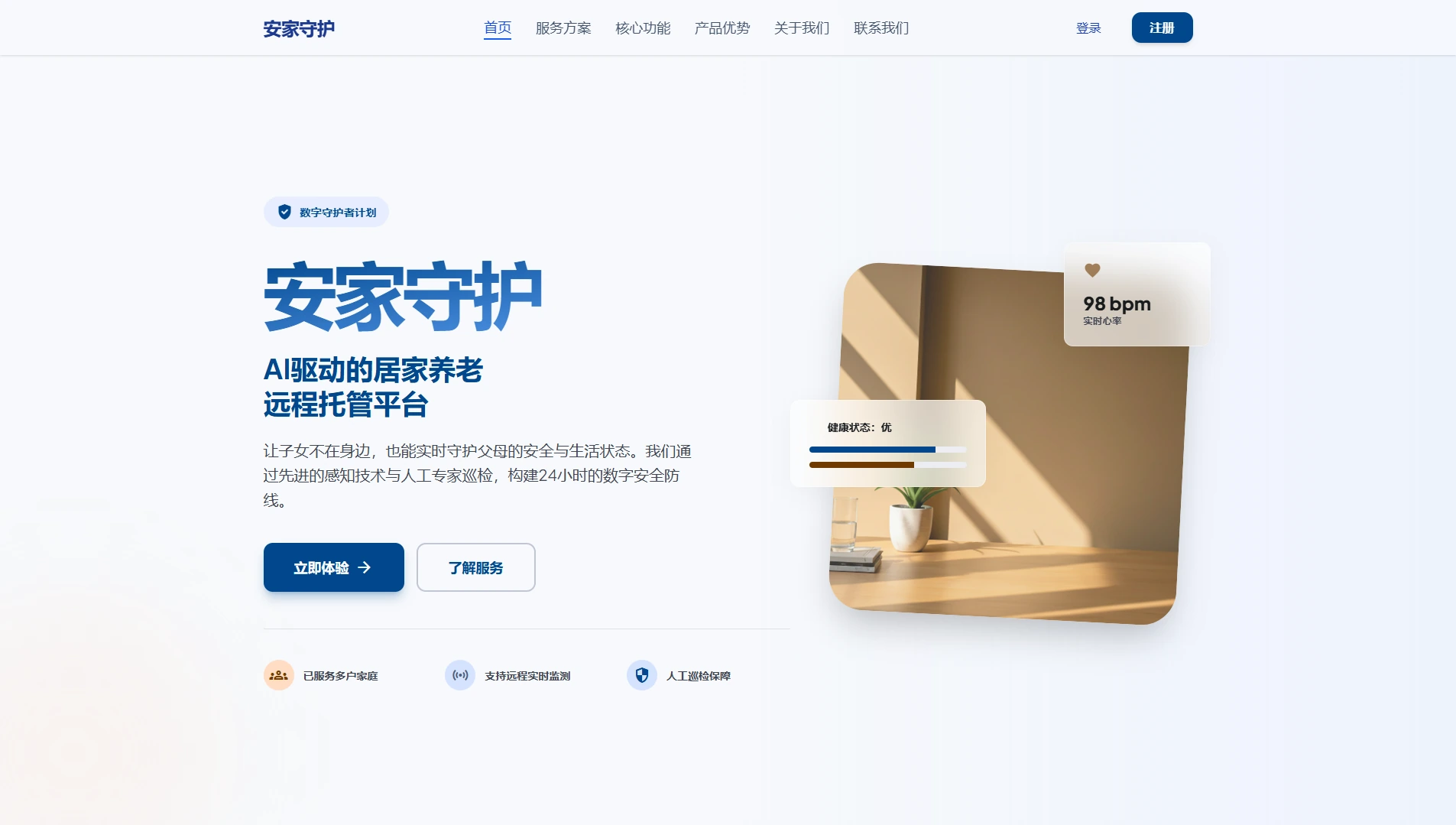
1. Hero overview
The landing view immediately positions the product as an AI-driven remote eldercare platform, then uses health-state cards to suggest the real-time protection layer.
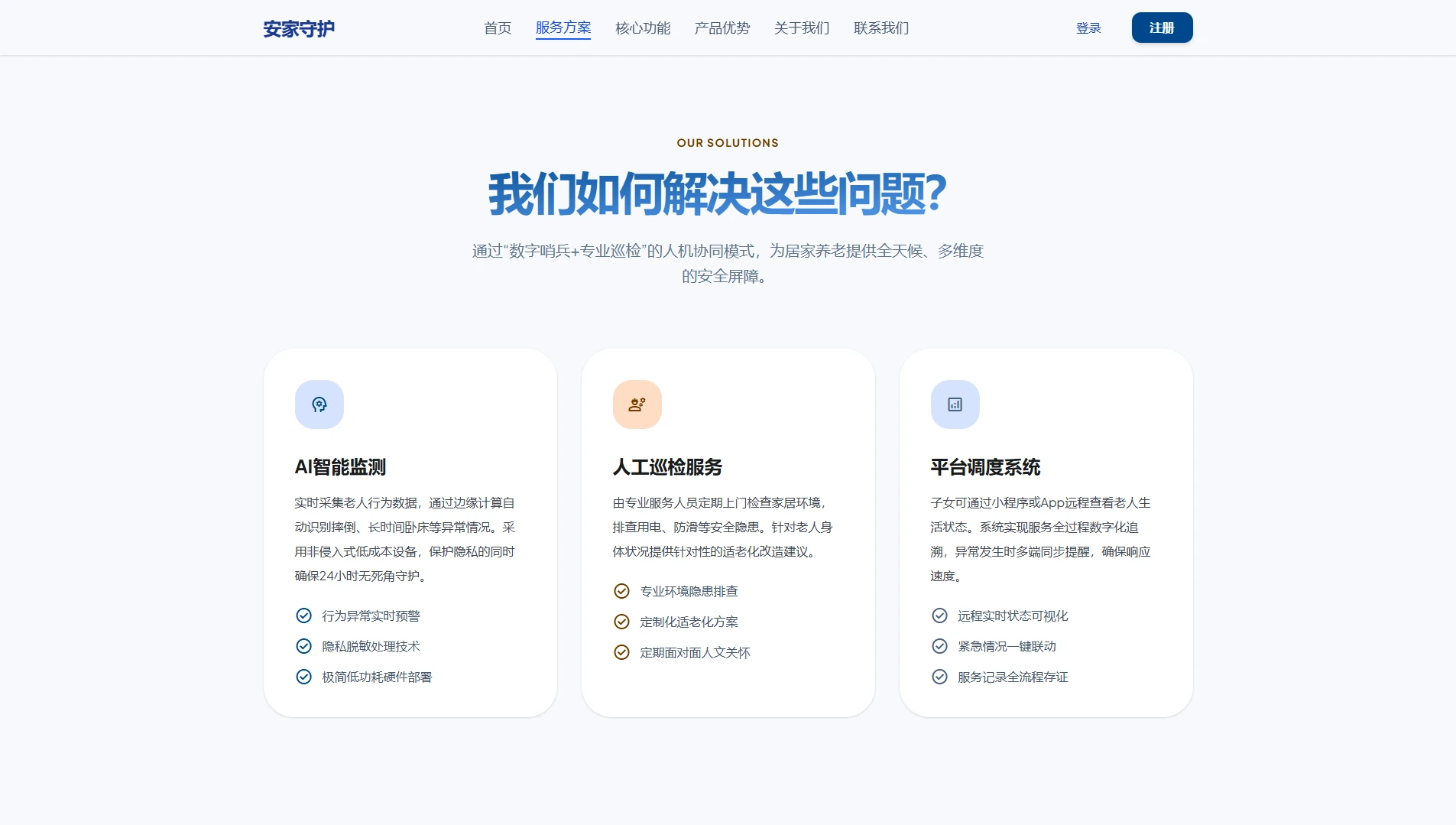
2. Service model
The solutions page lays out AI monitoring, manual inspection, and platform dispatch as parallel capability lines, making it easier to explain that the concept is not a single feature.
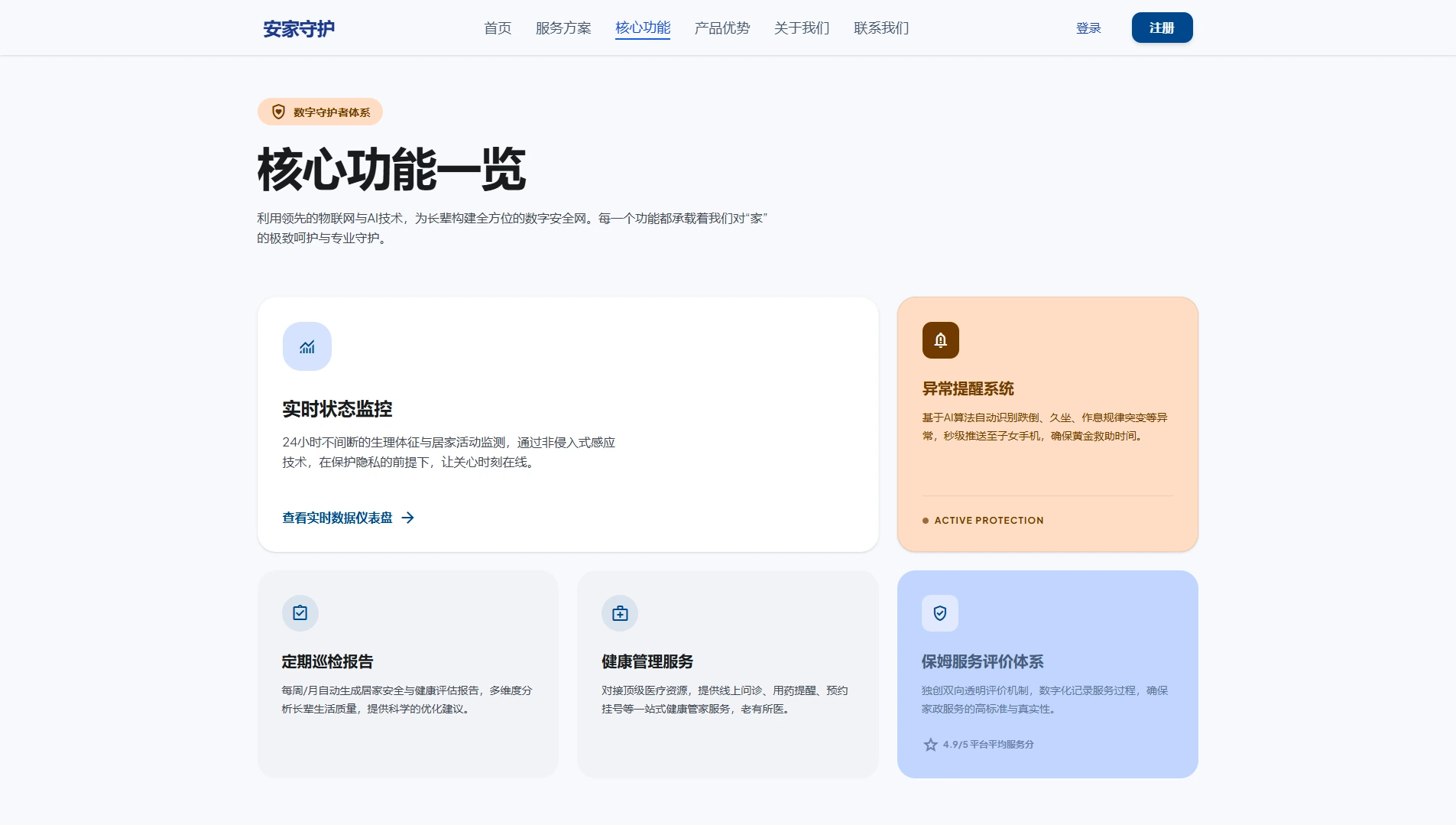
3. Core capabilities
The features page expands into alerts, health management, and service evaluation, which makes the offer feel closer to a workable eldercare product structure.
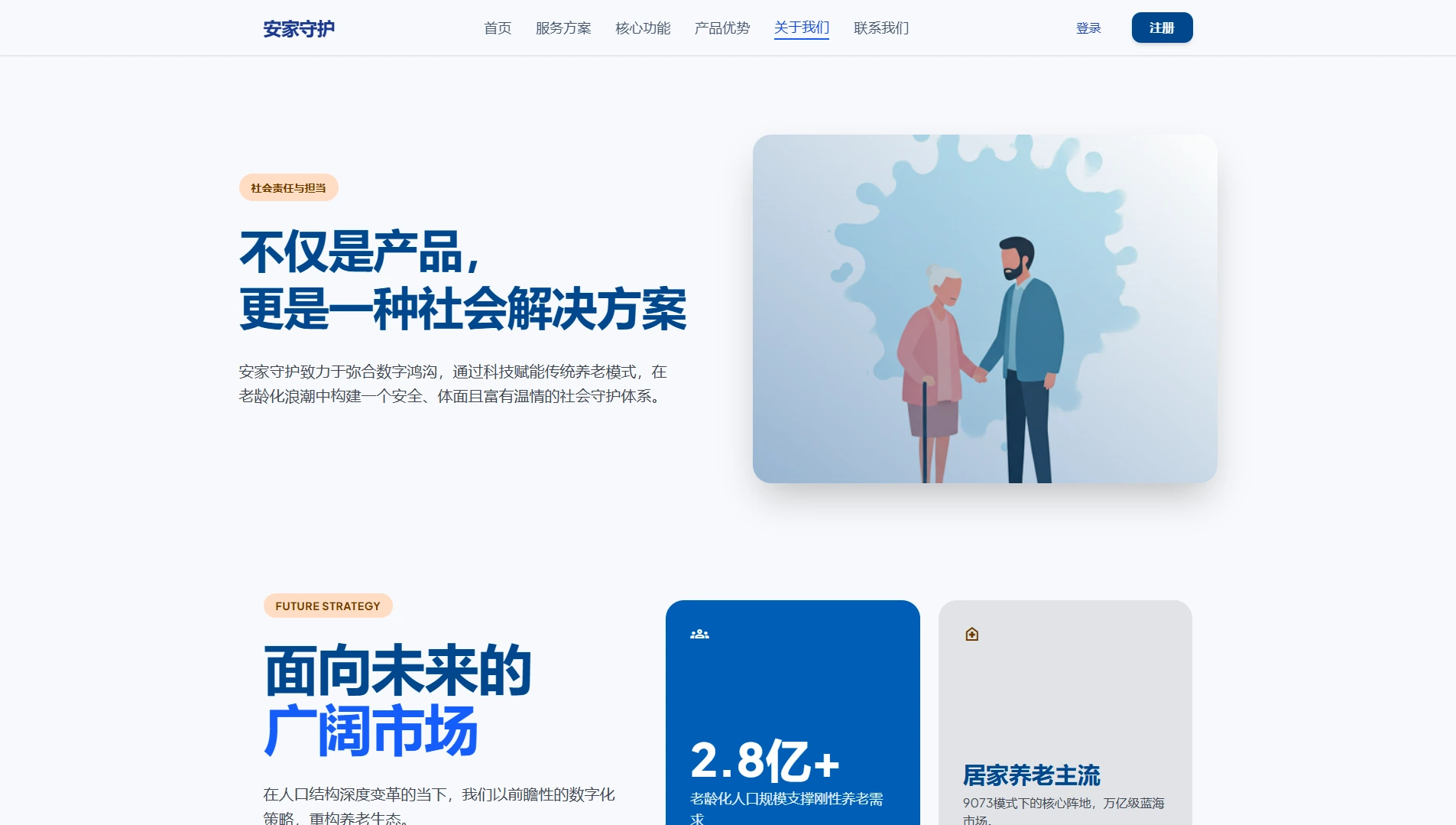
4. Social-value framing
The about page does not only describe the product. It also frames the case as a response to aging-society pressure, which makes it naturally suitable as a solution-oriented portfolio story.
06 / CASE STUDY
Outcome and current status
Current Value
- It organizes sensing, manual inspection, and service coordination into one coherent solution narrative
- It is useful for presenting the product direction and service-logic structure of an eldercare platform
- At this stage it is better framed as a solution prototype than as proof of a mature backend deployment
The value of this case is not that it proves a highly complex backend already exists. It is that it turns home eldercare protection into a clearer, more presentable, and more productizable solution structure.