01 / CASE STUDY
Project background
Project Background
Many travel-expense processes are not missing one more form. They are missing one shorter operating path. After a receipt is uploaded, itinerary context, budget rules, approval progress, and anomaly follow-up often live in separate places, which turns a routine claim into repeated back-and-forth.
Lingyin Reimbursement was designed not as another generic finance backend, but as a shared workspace where receipt capture, travel registration, approval follow-through, and management visibility stay connected from the start.
02 / CASE STUDY
Client and scenario challenges
This item is not separately specified in the public material. Refer to the original project records and agreed scope.
03 / CASE STUDY
Solution
System Approach
- Shared workspace: employees, finance reviewers, and managers work from one consistent information spine instead of disconnected partial views
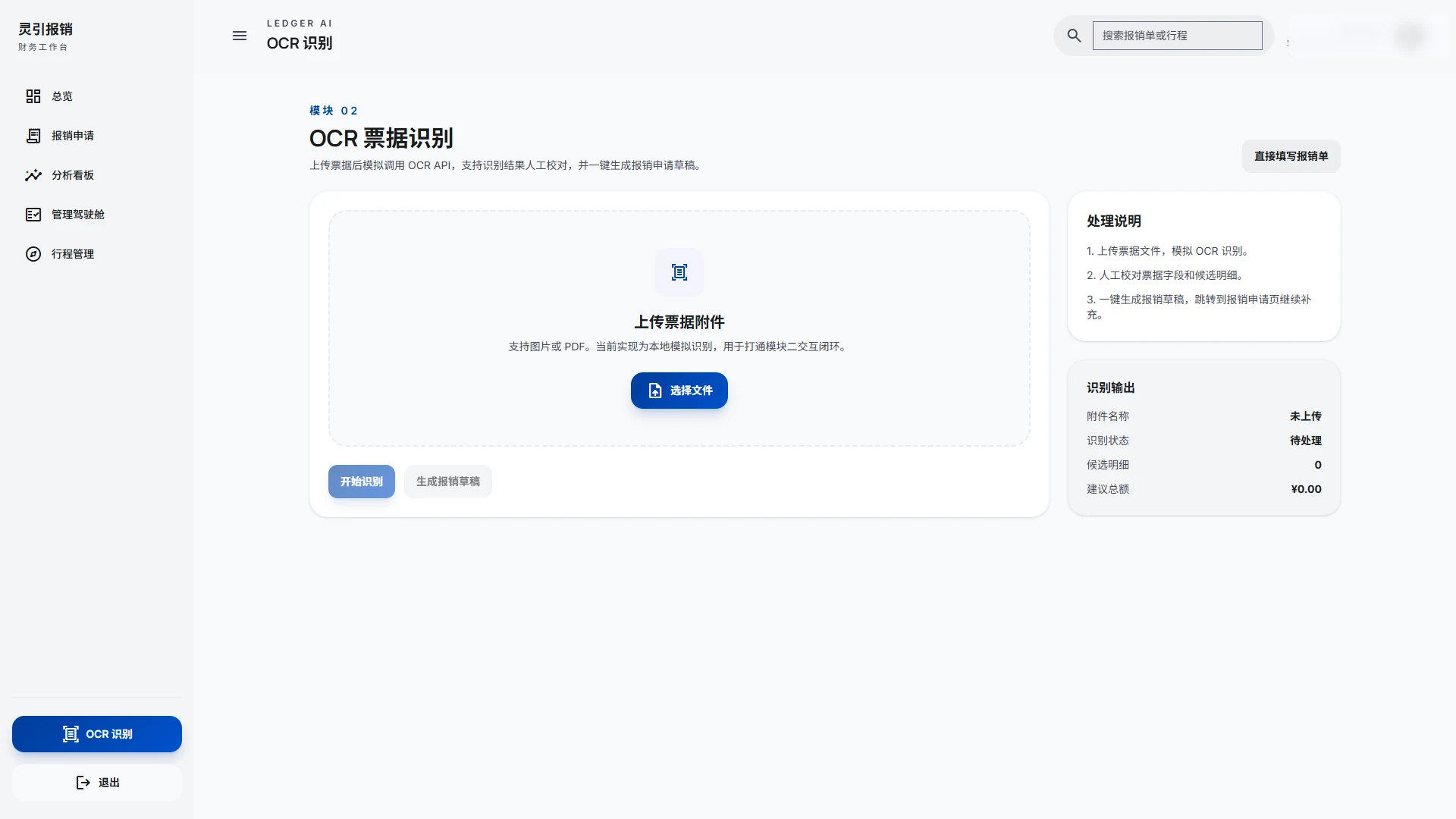
- Structured receipt capture: OCR reduces repeated manual entry and helps claims start with usable fields
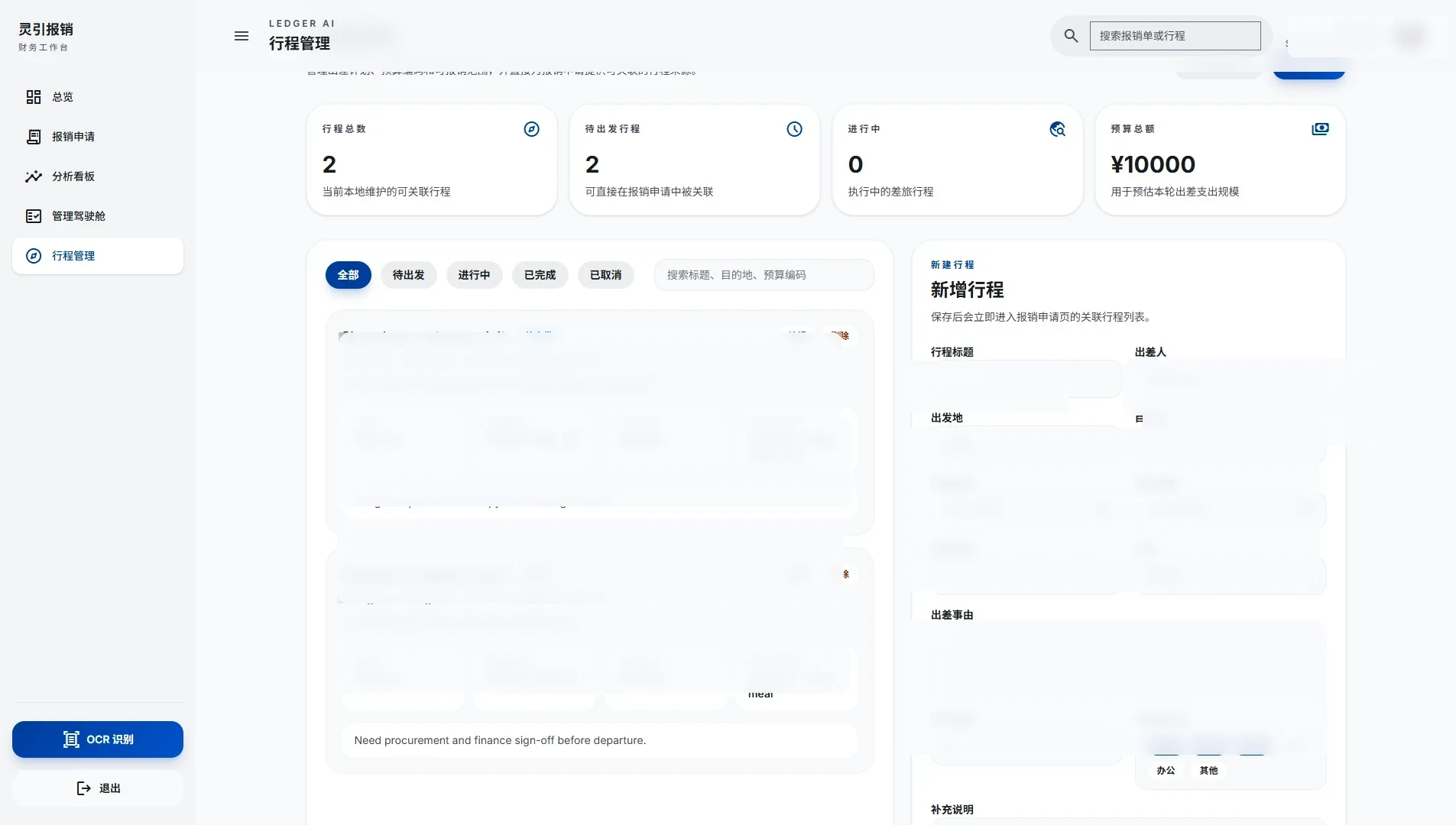
- Upfront trip coordination: destination, budget code, and expense category are linked early so reimbursement does not need to reconstruct context later
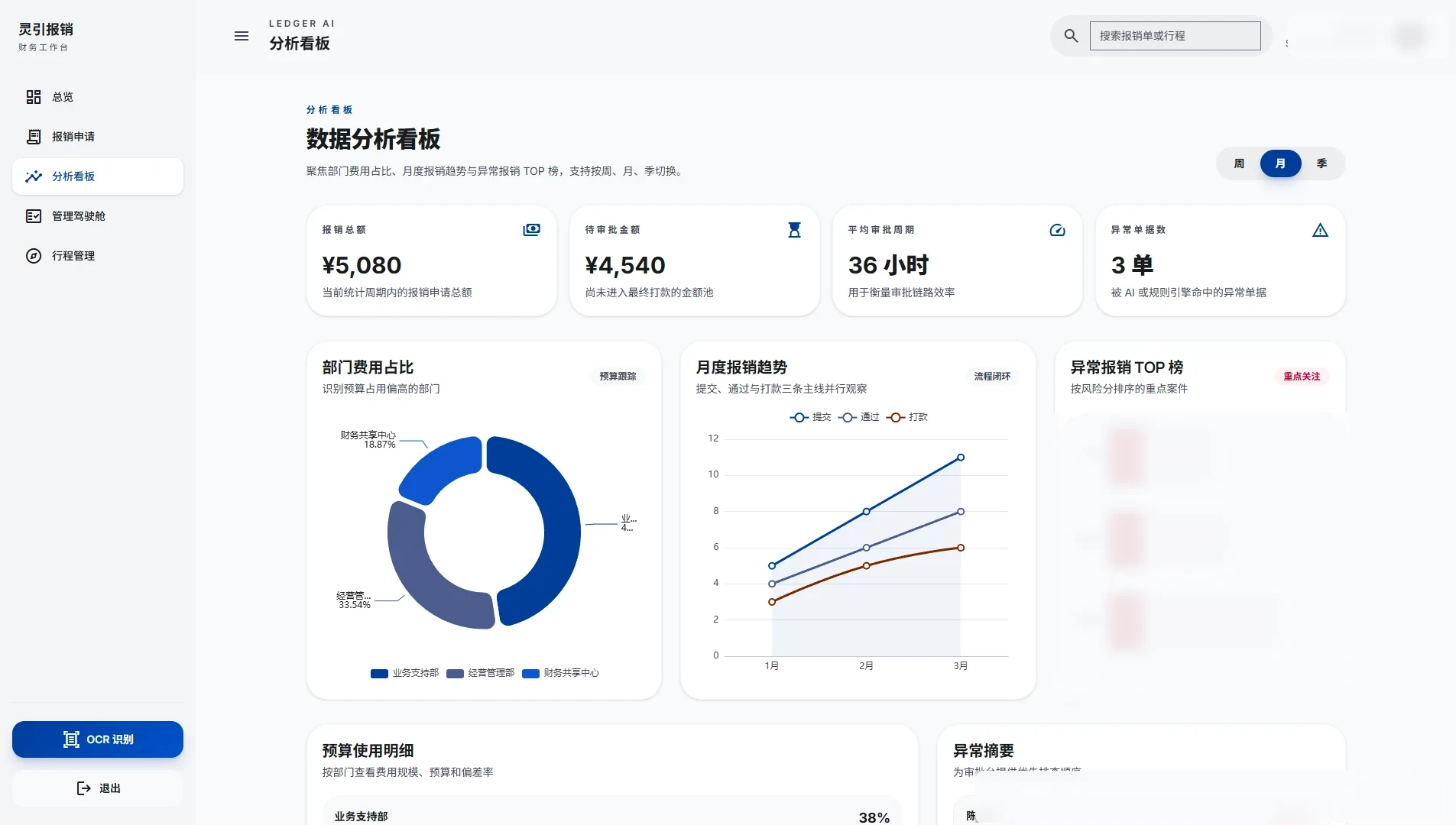
- Management insight: cost distribution, approval cycle time, and abnormal-claim ranking expose process friction before month-end consolidation
04 / CASE STUDY
Technology and capabilities
05 / CASE STUDY
Deliverables / prototype scope
Key Modules
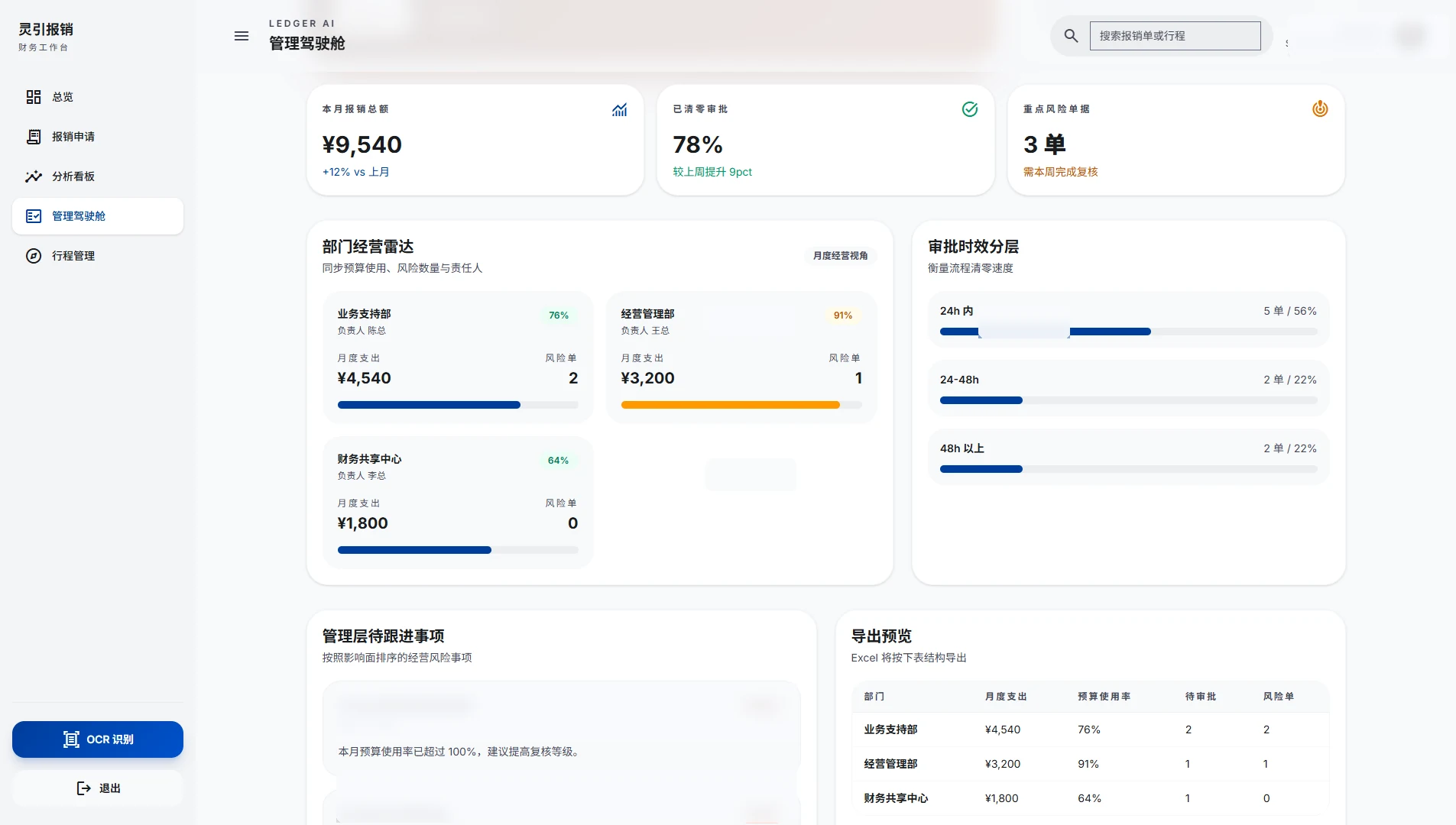
1. Management cockpit
The home view is not a number wall. It keeps claim amount, approval completion, risk items, and follow-up tasks in one finance operations surface that can be checked continuously.
2. Itinerary management
Travel plans and budget constraints are connected at the application stage so later reimbursement steps do not start from missing context.
3. Analytics board
Leads can see whether review speed is slowing, whether spending distribution is drifting, and which anomalies deserve attention before the month closes.
4. OCR receipt flow
The system proposes structured candidate fields from uploaded receipts and then hands them back for confirmation, keeping both automation speed and financial control.
06 / CASE STUDY
Outcome and current status
Outcome
- Expense, trip, and budget context no longer live in isolated steps
- Employee submission and management review now share the same operating context
- Approval efficiency and claim risk become continuously visible instead of surfacing only at the end of the month
- The product reads as a stable expense-coordination workspace rather than a one-time claim form
The real value is not only faster receipt recognition. It is a reimbursement flow that stays more continuous, more visible, and less repetitive from submission to review.